How Wide Should My Fence Gates Be?
When planning a new fence, homeowners often focus on choosing the right material, style, and height—but one important detail is often overlooked:
“How wide should my gate be?”
The right gate width can make everyday life much easier. Whether you’re walking the dog, mowing the lawn, moving patio furniture, or parking a trailer, selecting the proper gate size now can save you frustration later.
At Slagle Fence, we help homeowners throughout the Kansas City metro choose gate sizes that fit both their current needs and future plans. Here’s everything you should know before deciding on your gate width.
Why Gate Width Matters
Your gate is one of the most frequently used parts of your fence. 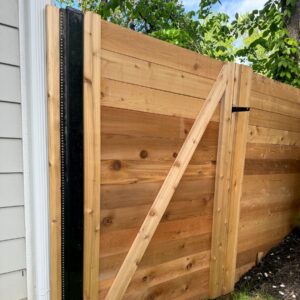
Choosing the wrong size can create problems such as:
- Lawn equipment won’t fit.
- Patio furniture is difficult to move.
- Delivery access is limited.
- Future landscaping projects become more challenging.
- Vehicles can’t access the backyard.
A little planning goes a long way toward making your fence more functional.
Standard Walk Gate Sizes
Most residential fences include at least one walk gate.
Common widths include:
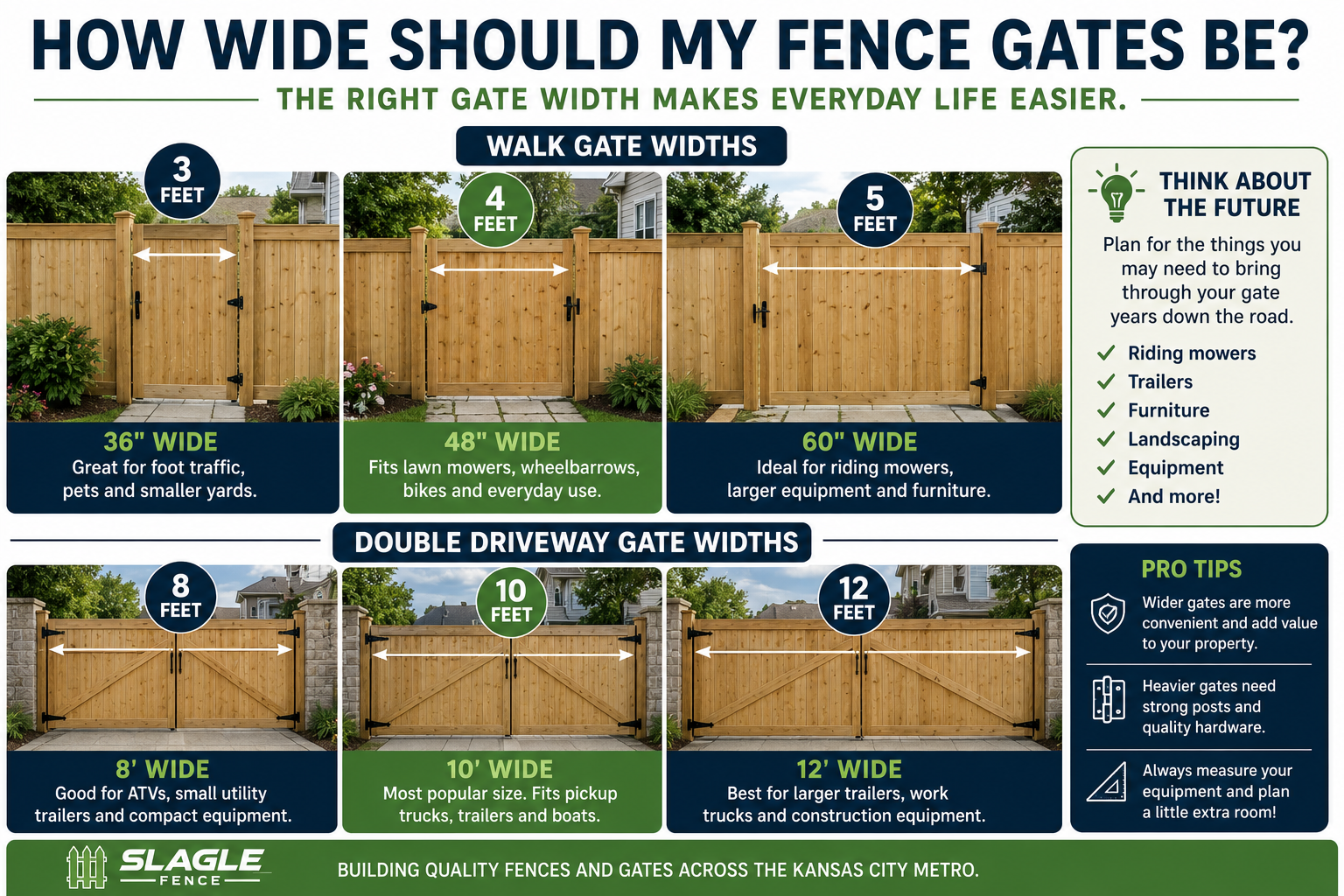
3-Foot Gate (36 inches)
Best for:
- Everyday foot traffic
- Pets
- Small yards
- Basic backyard access
This is one of the most common gate sizes for residential fencing.
4-Foot Gate (48 inches)
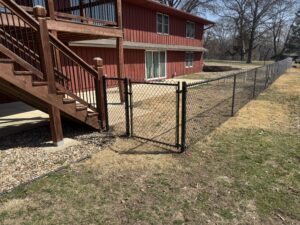 Ideal for:
- Lawn mowers
- Wheelbarrows
- Trash carts
- Bicycles
- Small garden equipment
Many homeowners choose a 4-foot gate because it provides much greater flexibility with only a small increase in cost.
5-Foot Gate (60 inches)
Perfect for:
- Riding lawn mowers
- Larger landscaping equipment
- Outdoor furniture
- Utility carts
If you expect to move larger items into your backyard, a 5-foot gate can be a smart investment.
Double Drive Gates 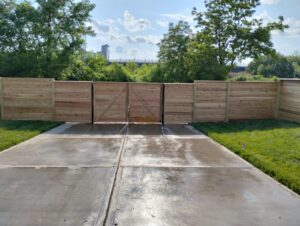
If vehicle access is important, you’ll likely want a double gate.
Common double gate widths include:
8-Foot Gate
Best for:
- Small utility trailers
- ATVs
- Compact equipment
10-Foot Gate
One of the most popular choices.
Provides room for:
- Pickup trucks
- Utility trailers
- Boats
- Small campers
12-Foot Gate
Recommended for:
- Large trailers
- Work trucks
- Construction equipment
- Future backyard projects
Many homeowners appreciate having extra clearance rather than wishing they had installed a wider gate later.
Think About Future Needs
When choosing a gate size, don’t just think about today.
Ask yourself:
- Will I buy a riding mower?
- Could I install a pool?
- Will I build a shed?
- Do I plan to add landscaping?
- Will I own a boat or trailer?
- Might I install a patio?
A slightly wider gate today can prevent expensive modifications in the future.
Gate Width by Fence Type
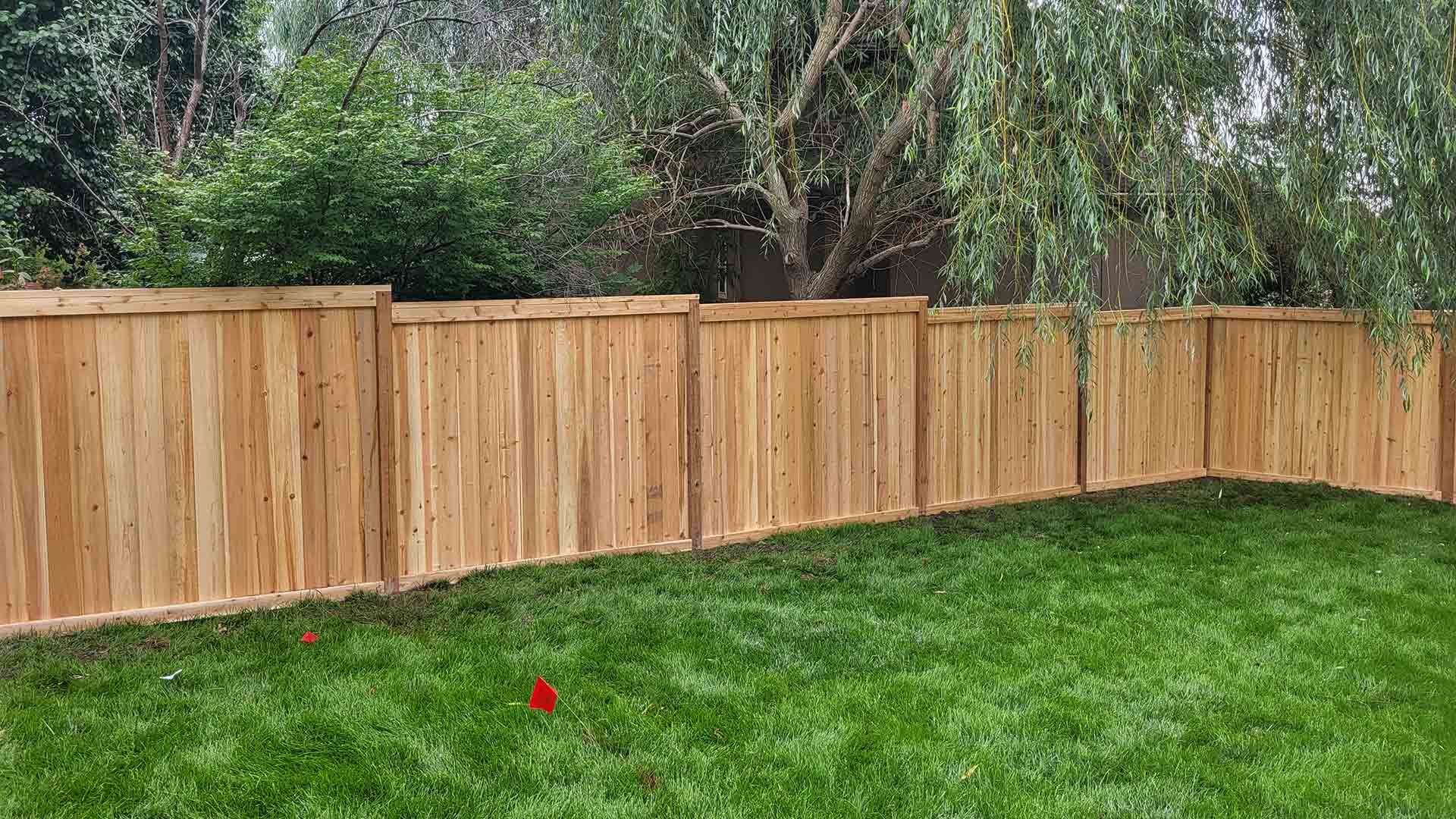
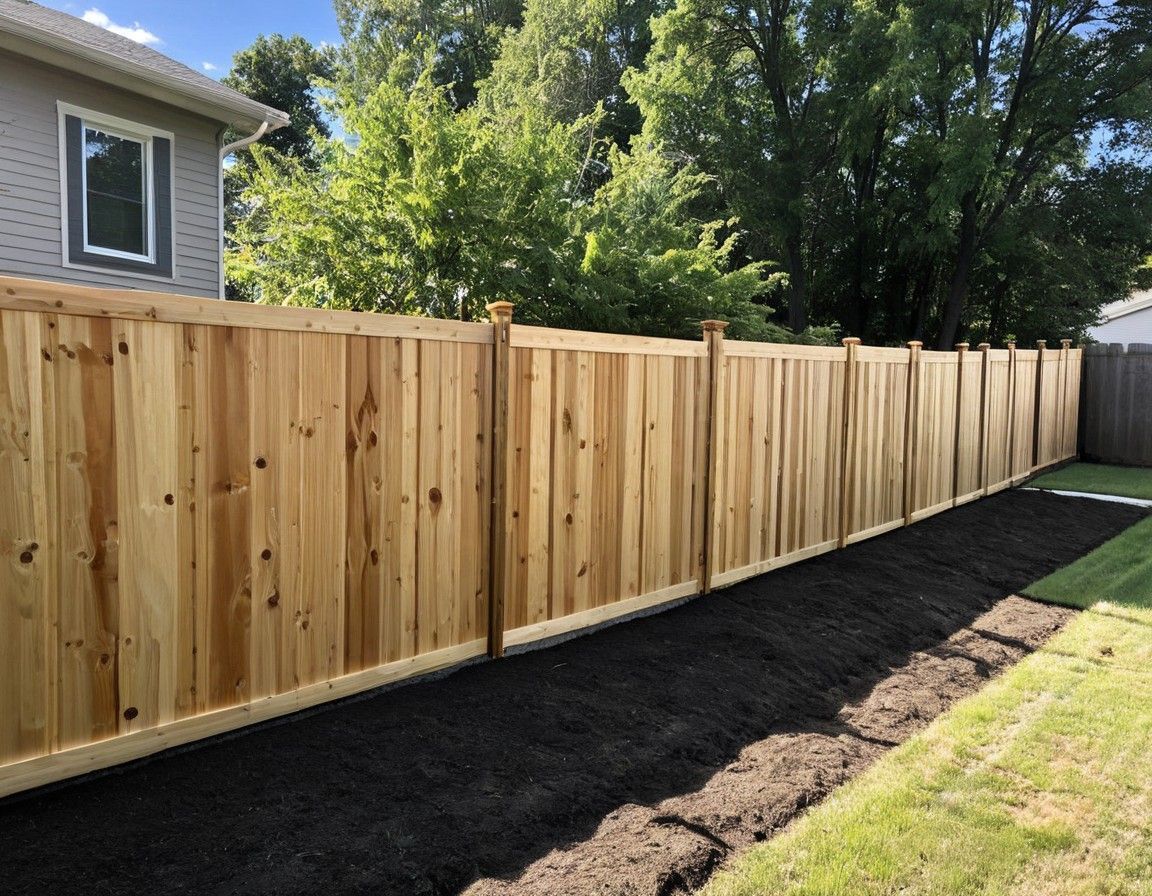
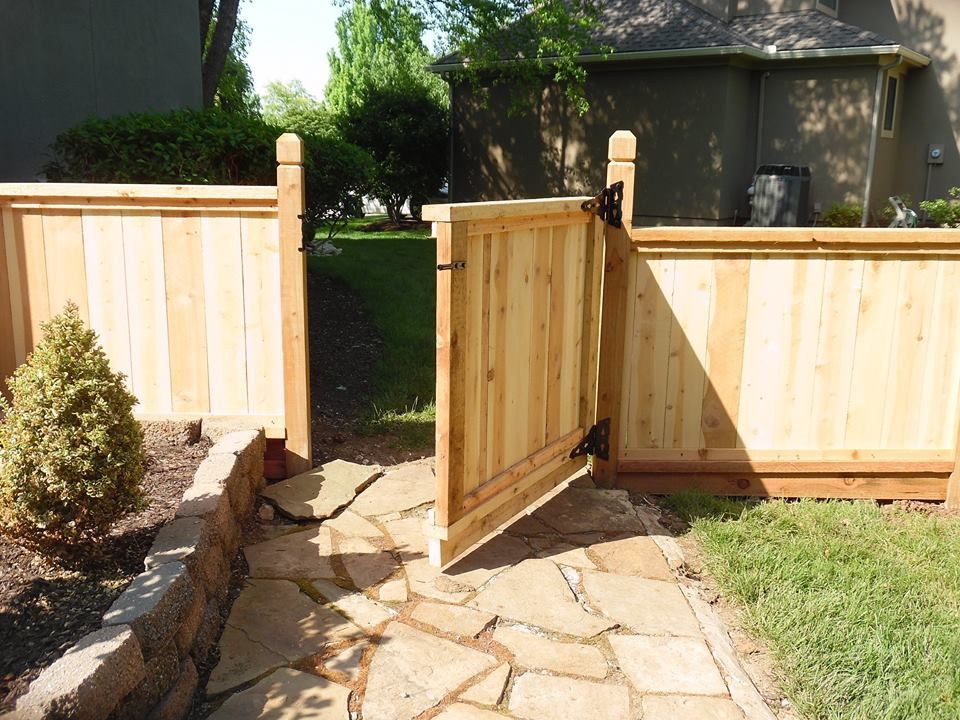
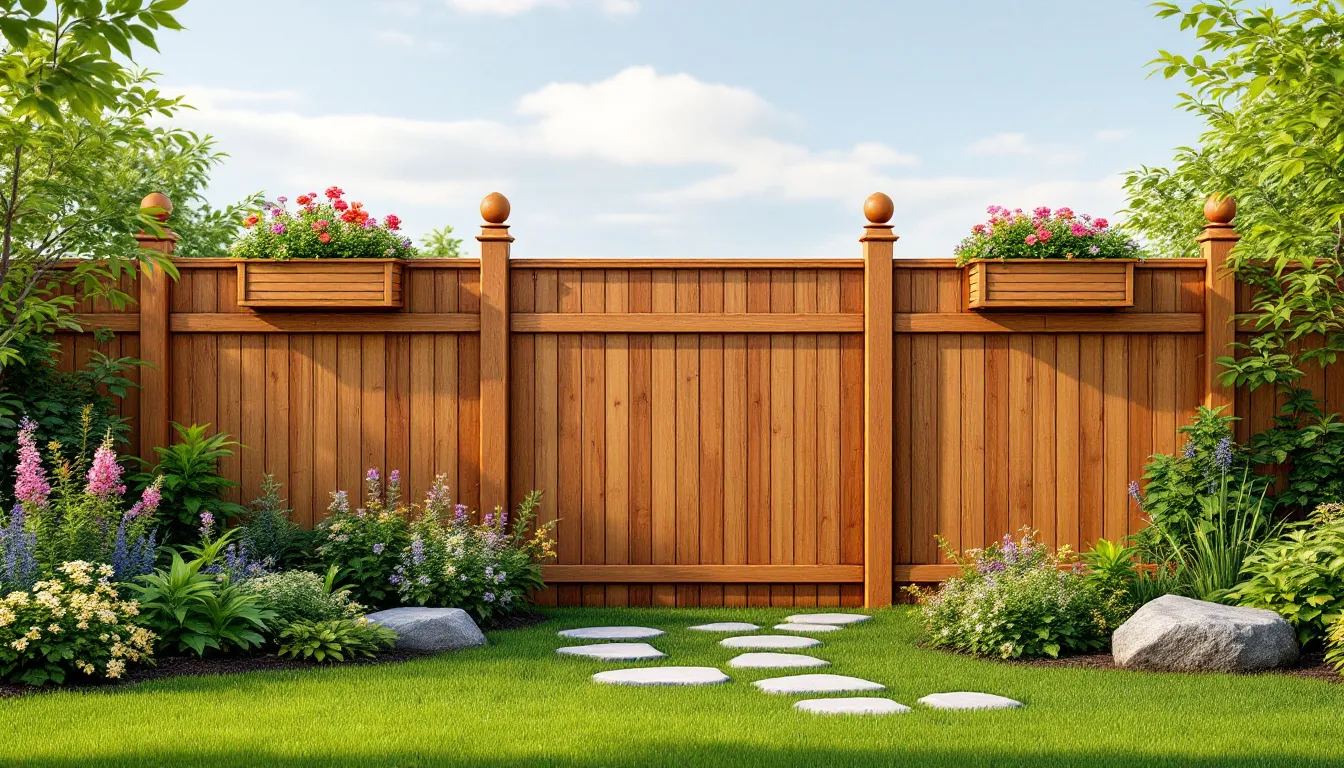
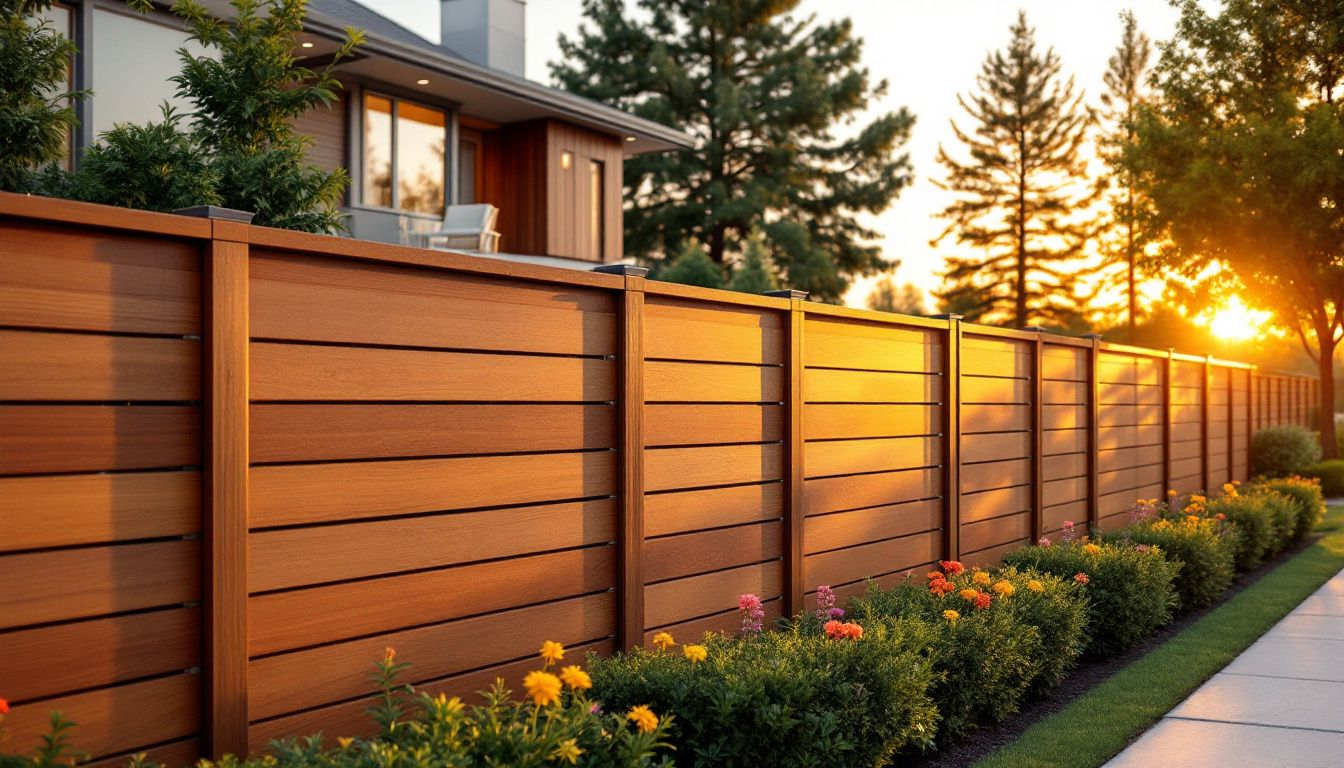
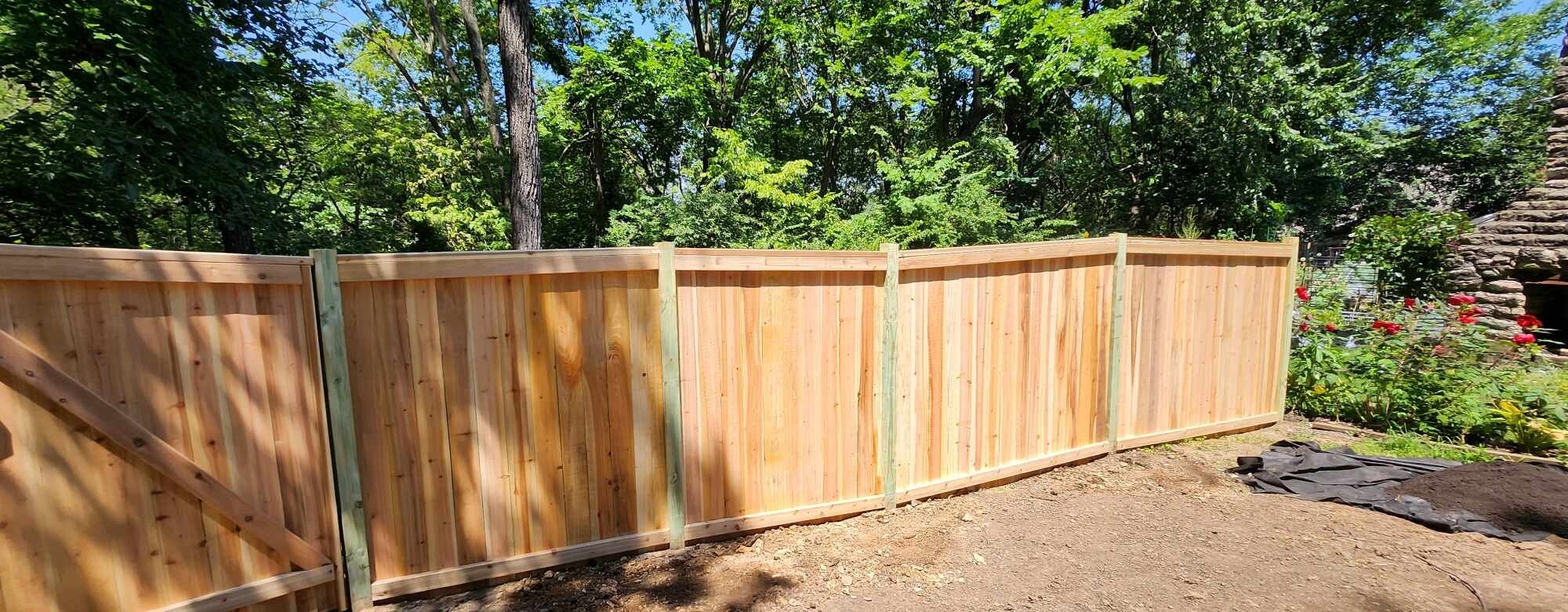
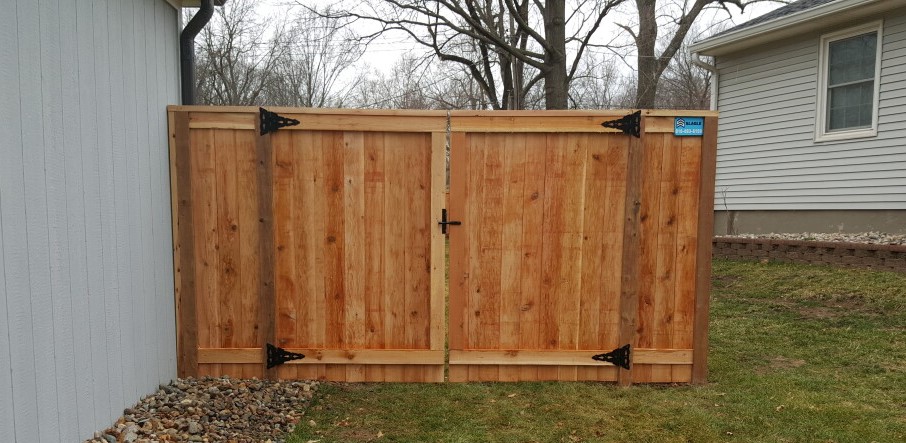
Cedar Privacy Fence
Popular gate sizes include:
- 4-foot walk gate
- 5-foot walk gate
- 10-foot double gate
Cedar gates are often reinforced to prevent sagging over time.
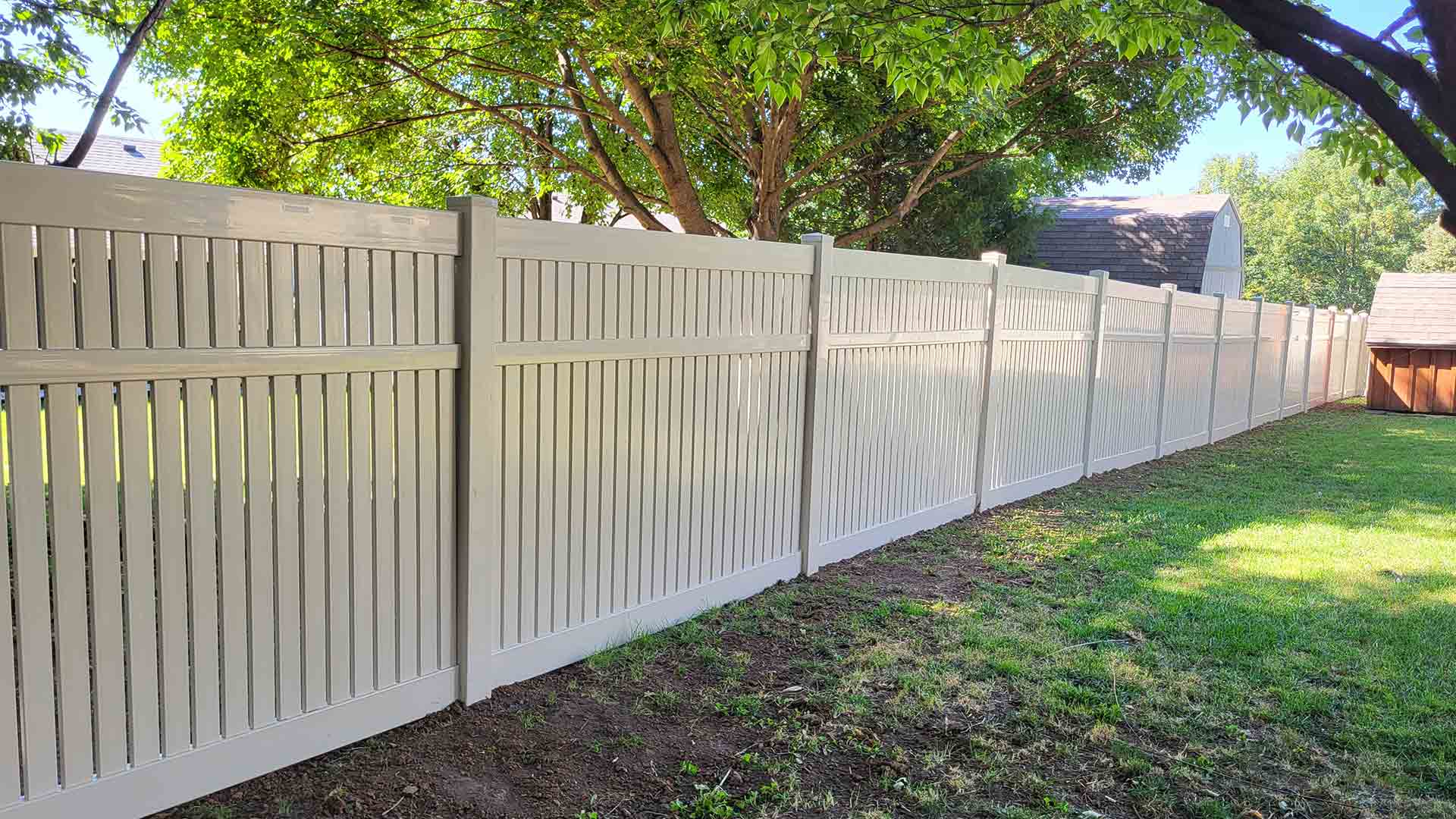
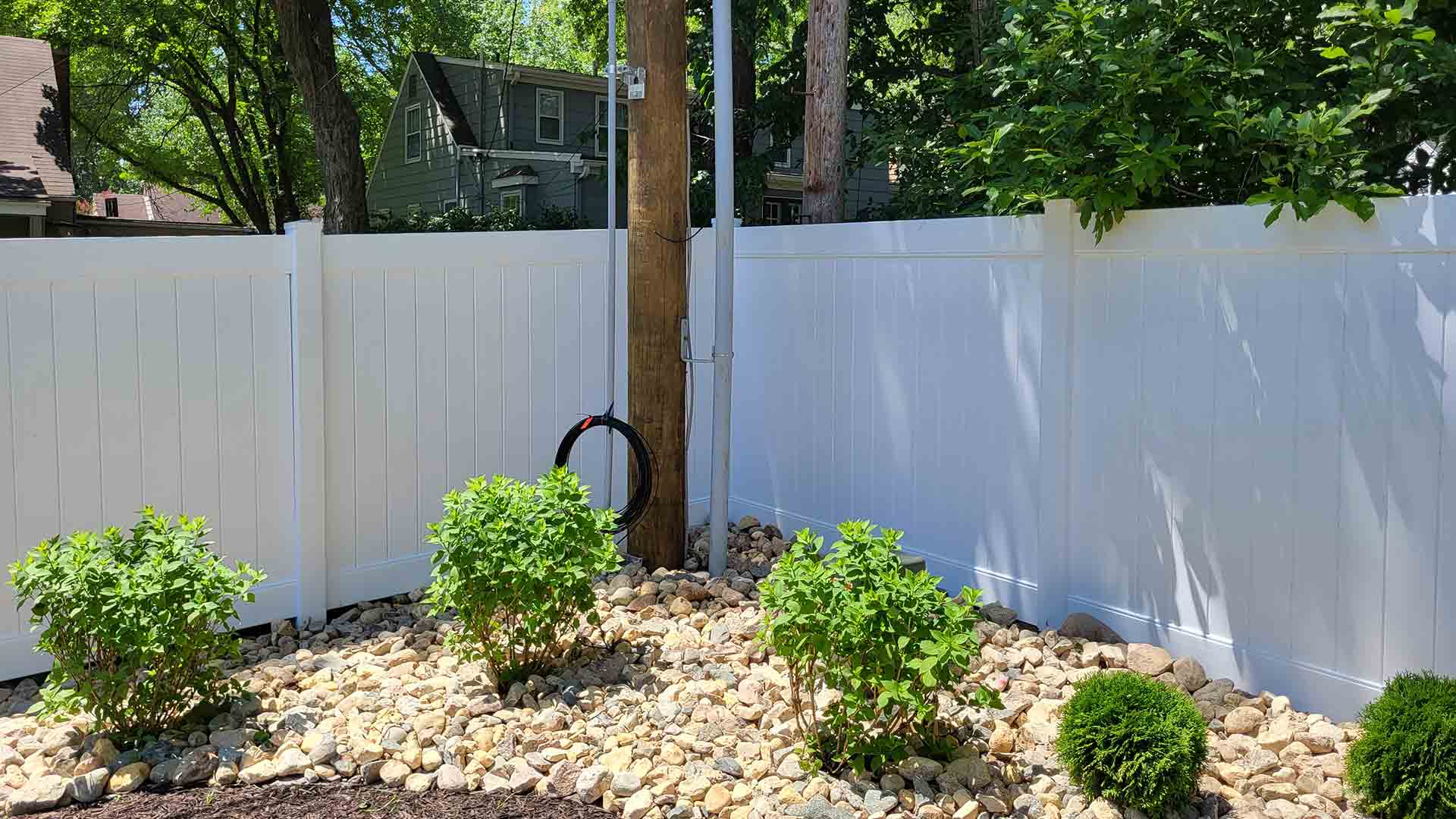
Vinyl Fence
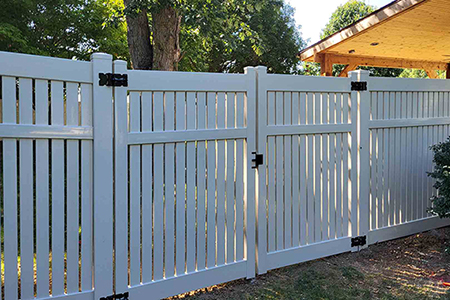
Vinyl gates commonly range from:
- 3 feet
- 4 feet
- Double drive gates
Because vinyl is heavier than many homeowners realize, professional installation is essential for proper support.
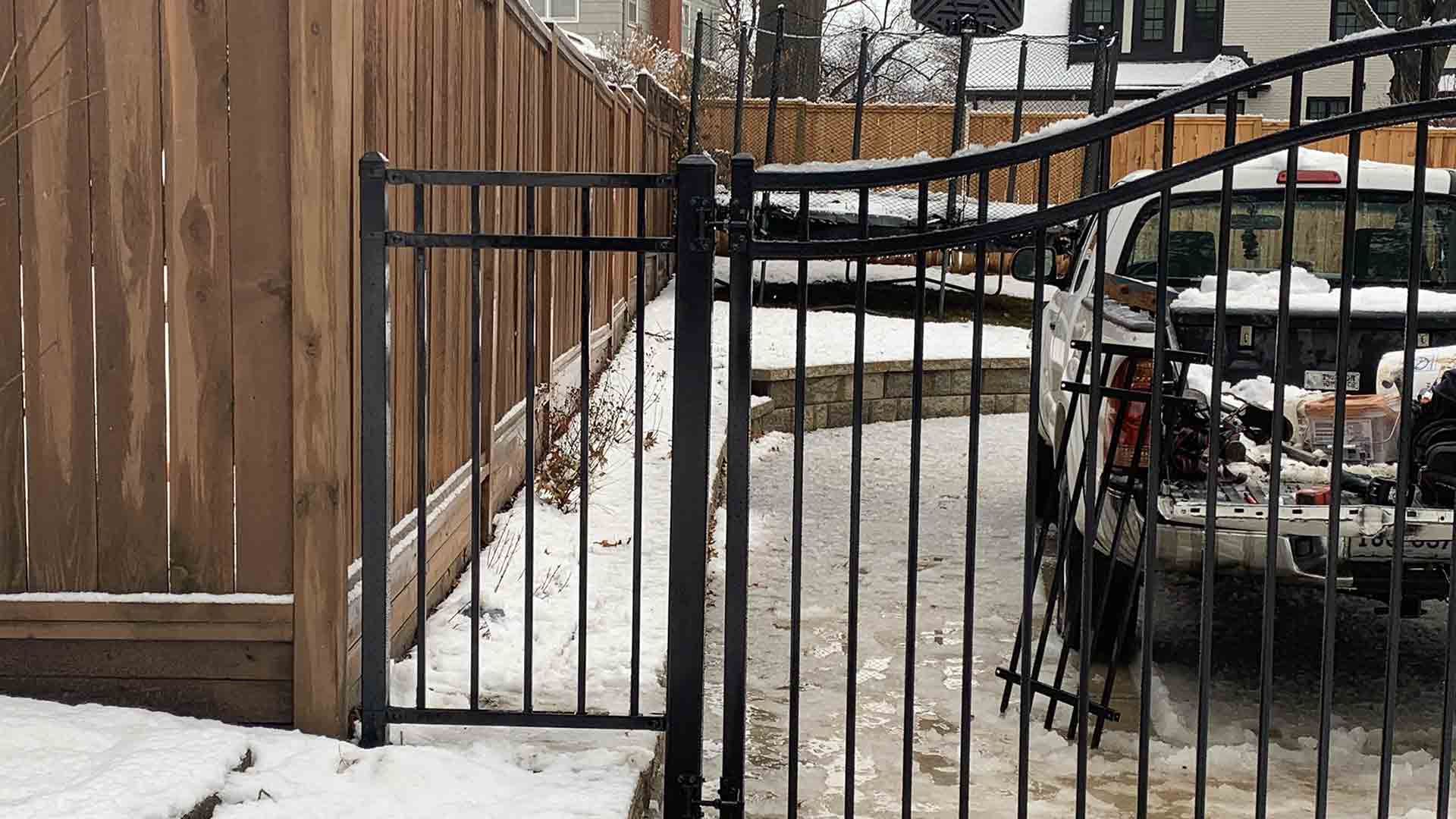
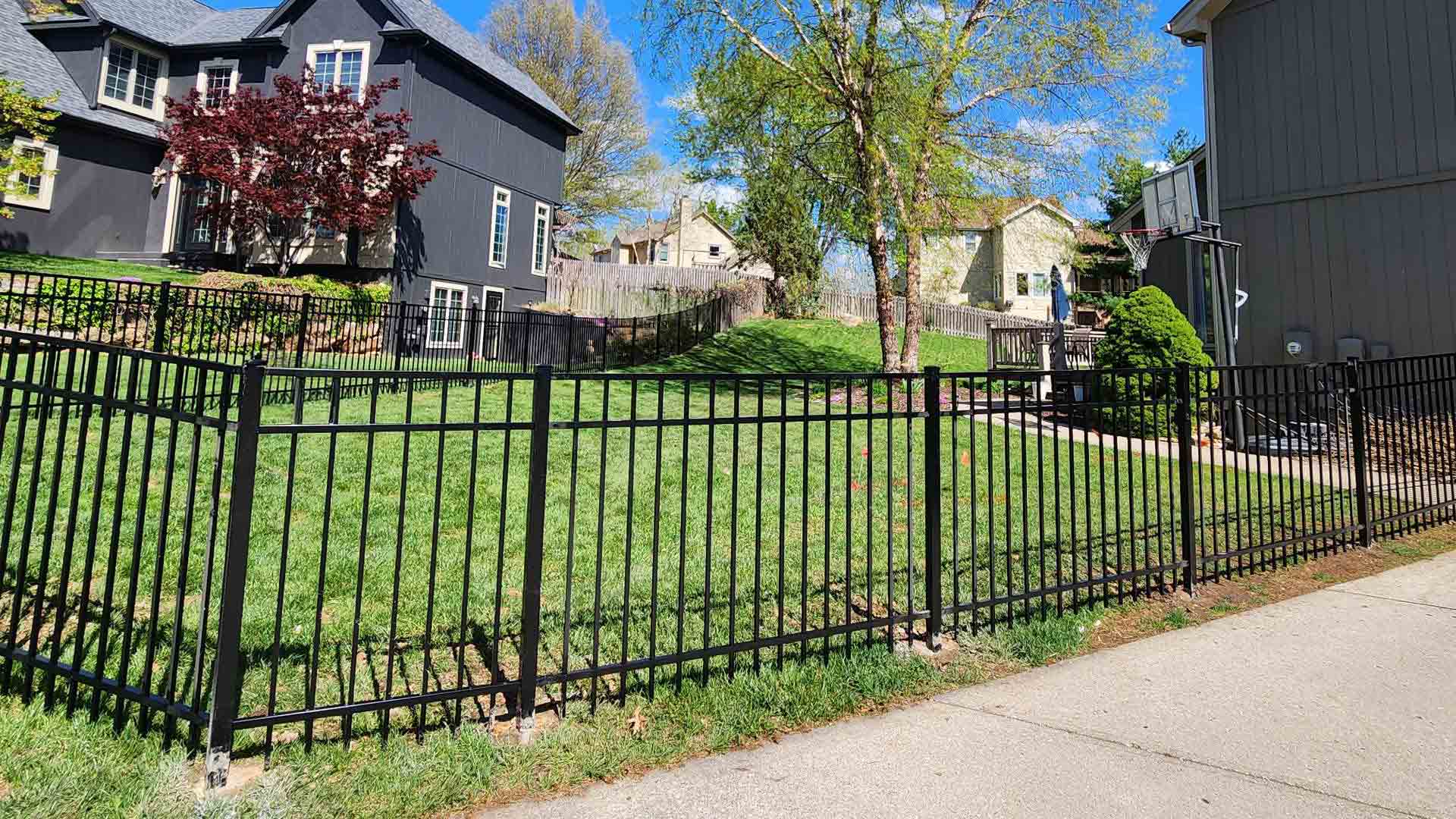
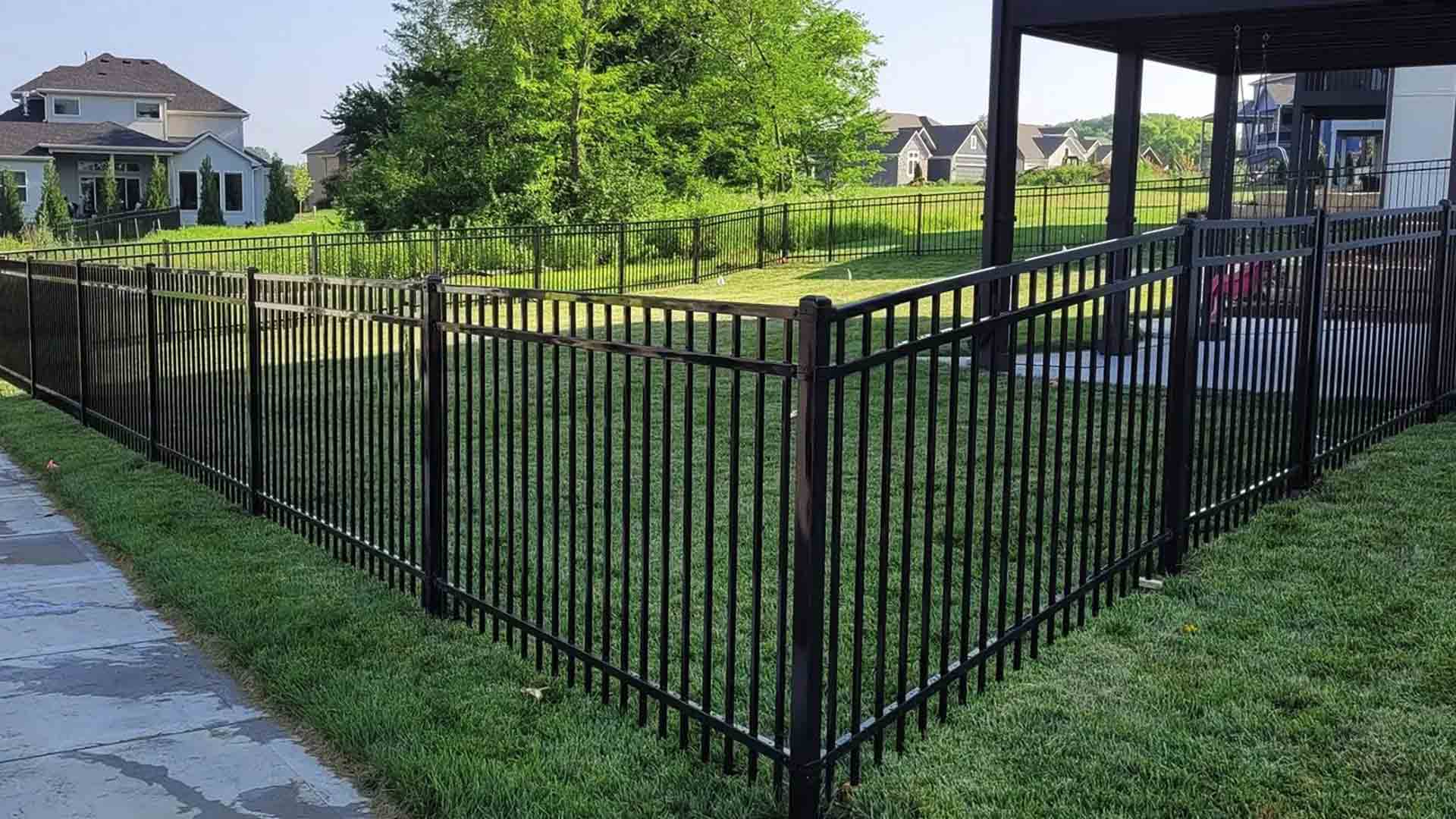
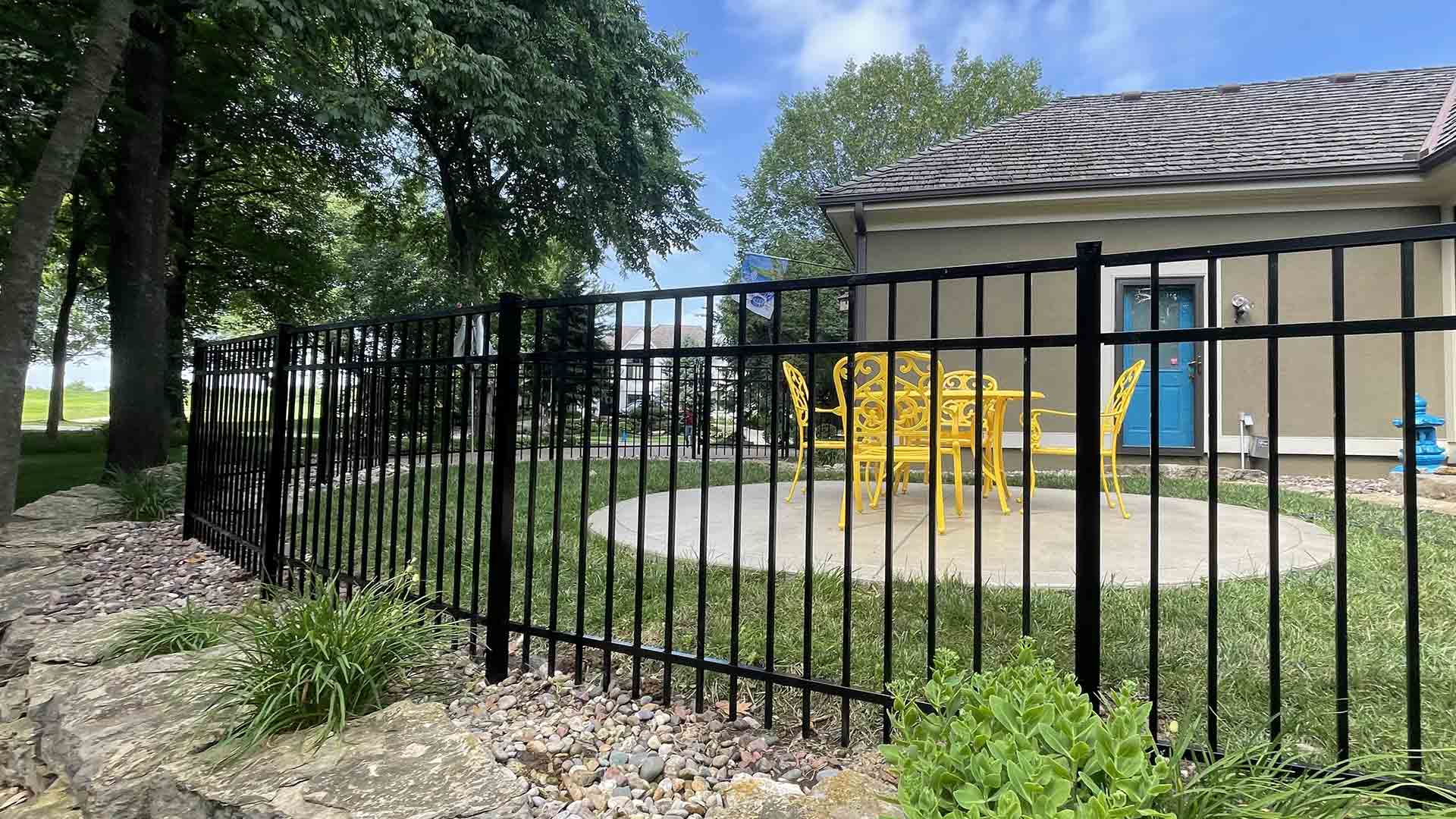
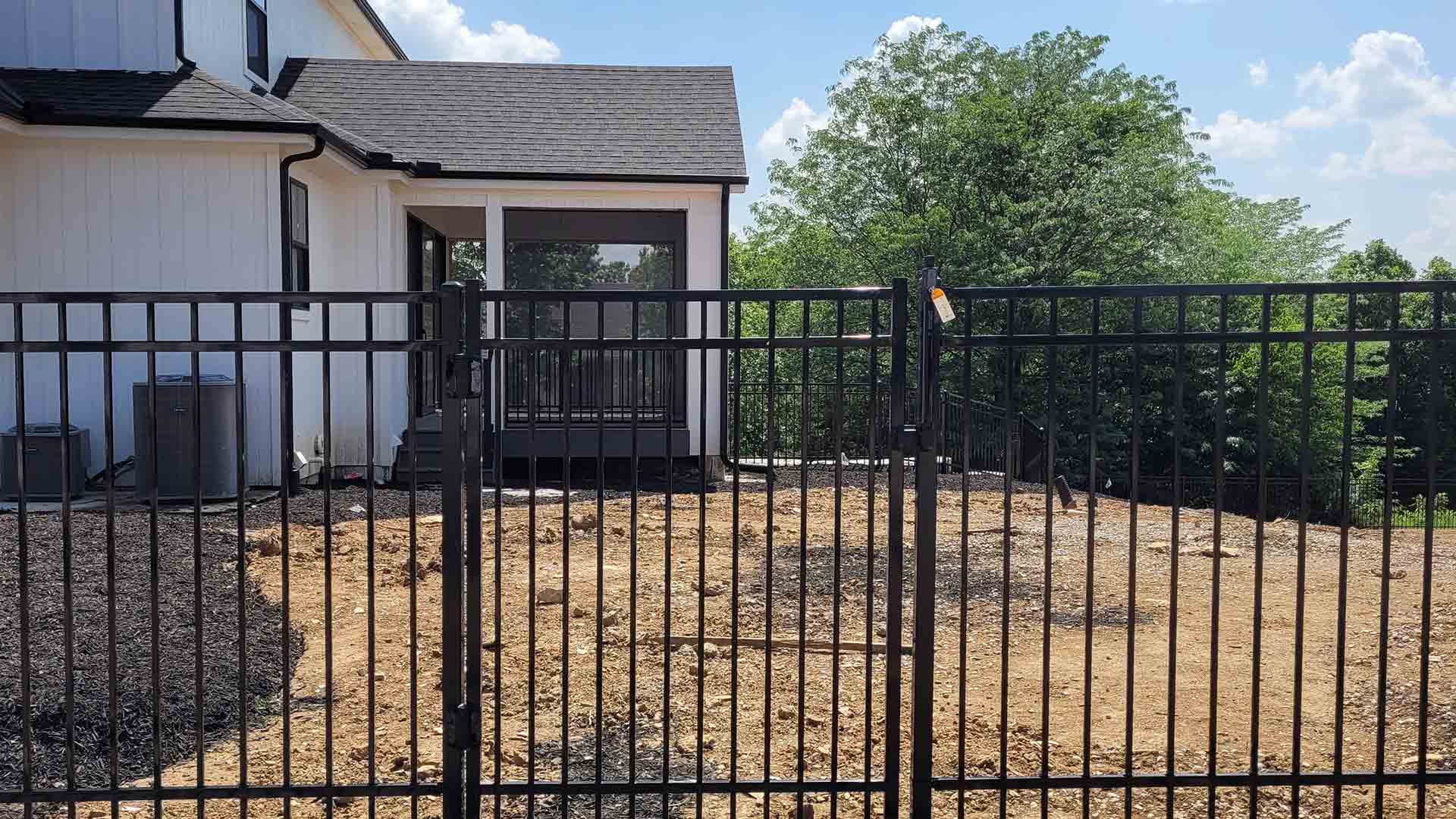
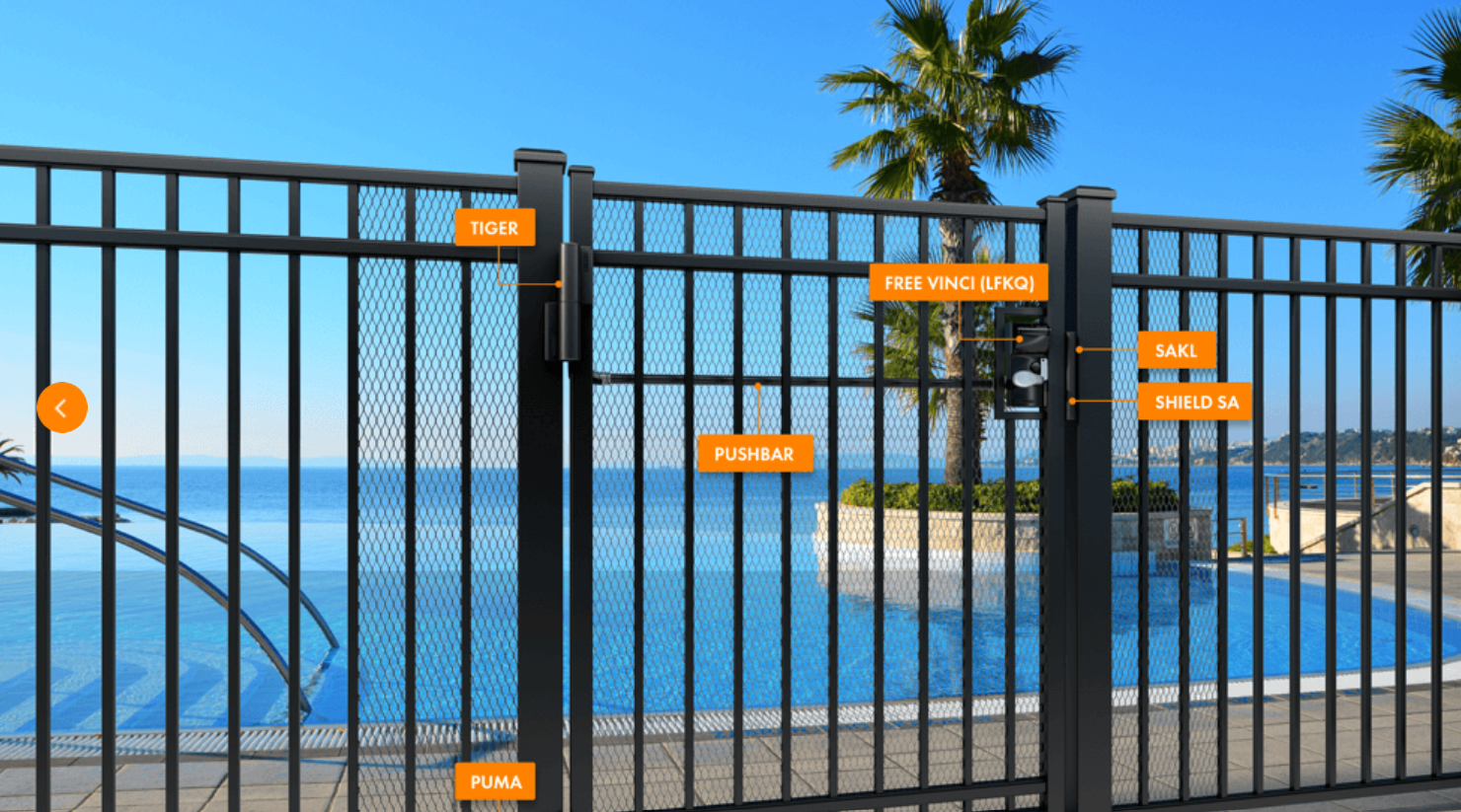
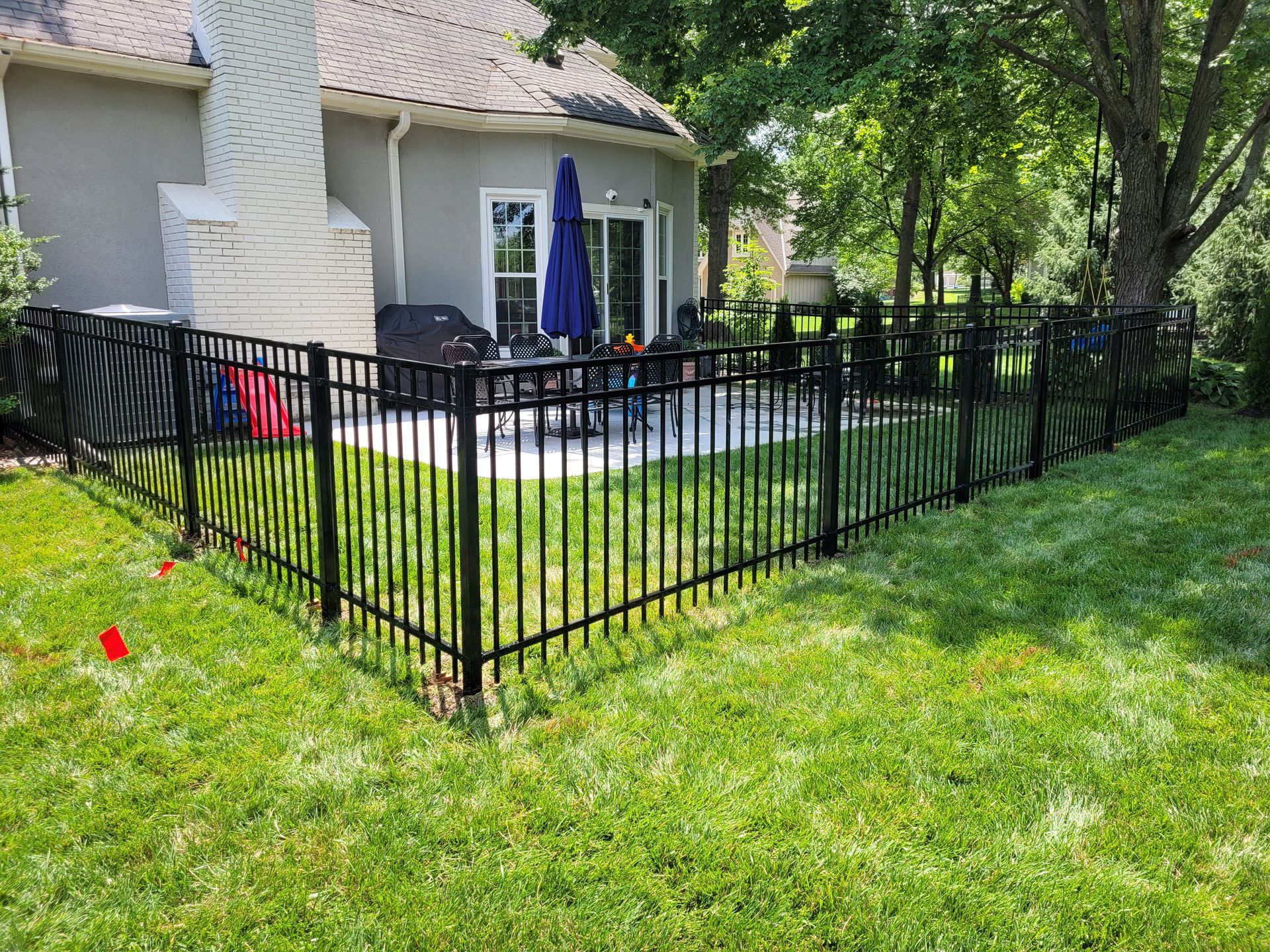
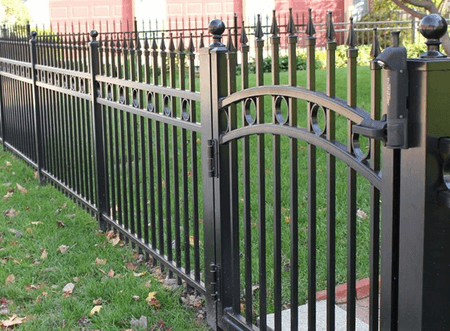
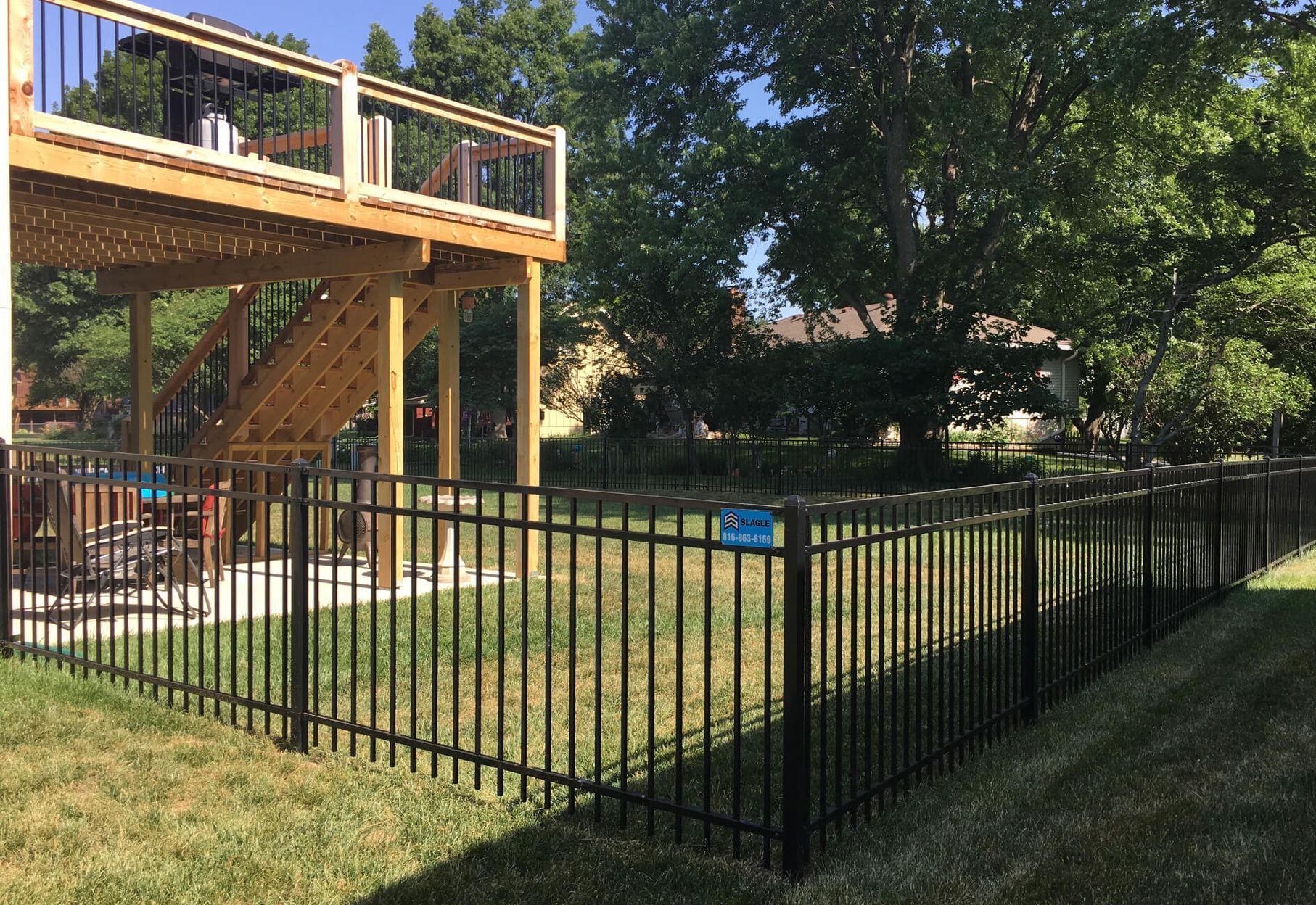
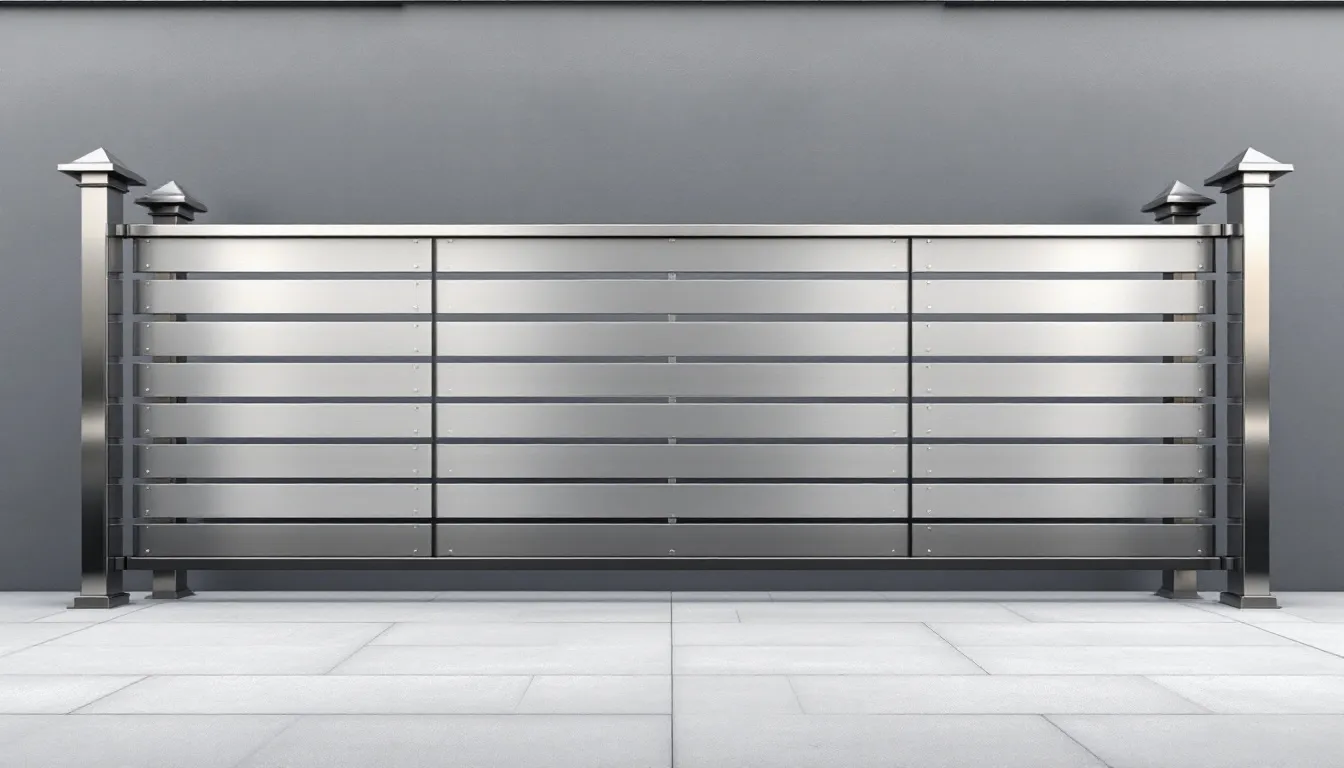
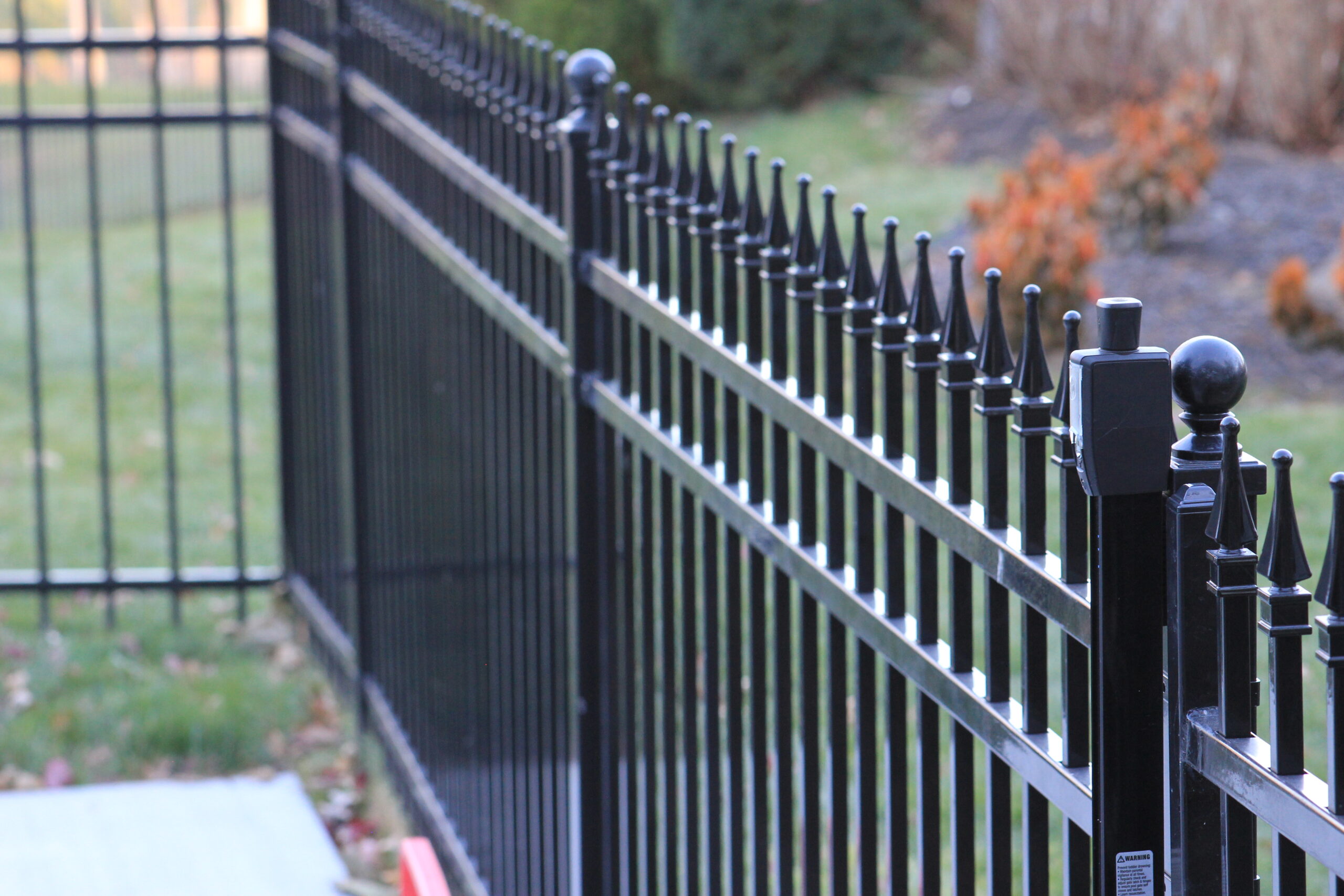
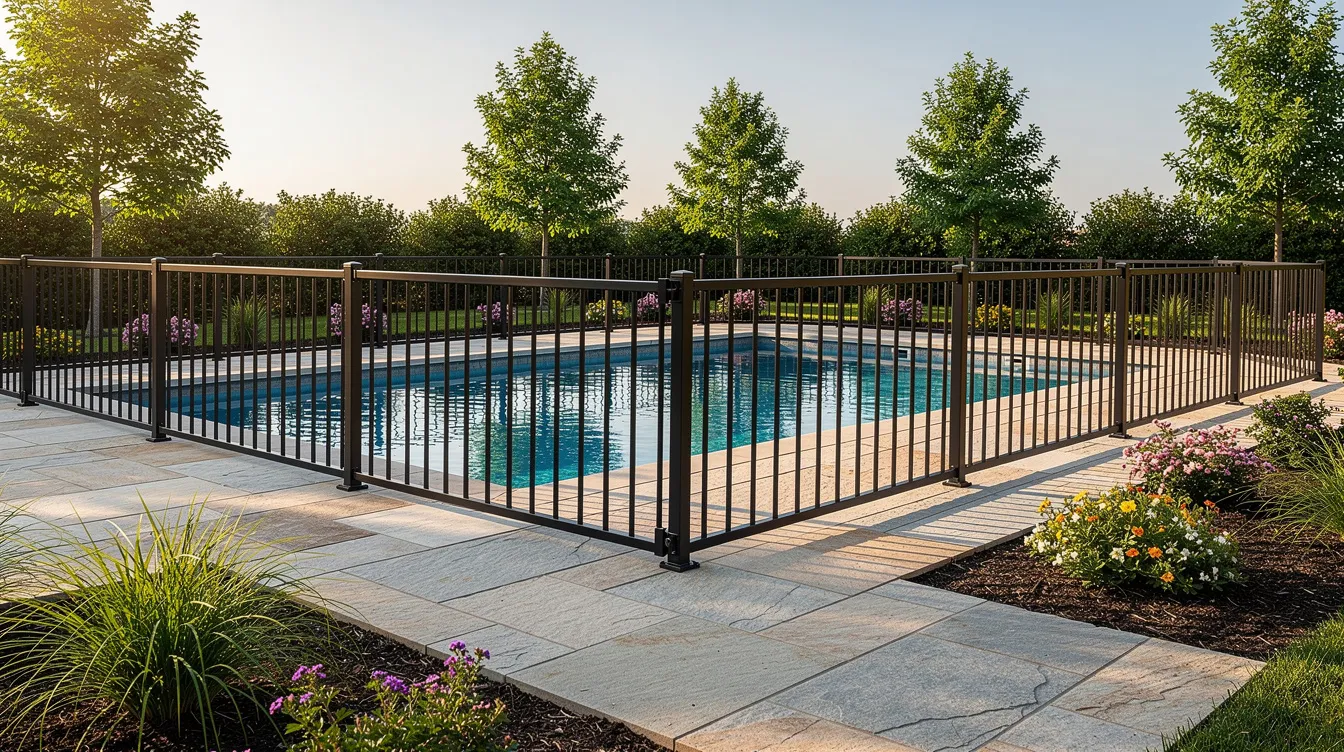
Ornamental Steel Fence
Steel gates work well for:
- Decorative entrances
- Pools
- Driveways
Widths vary depending on the application.
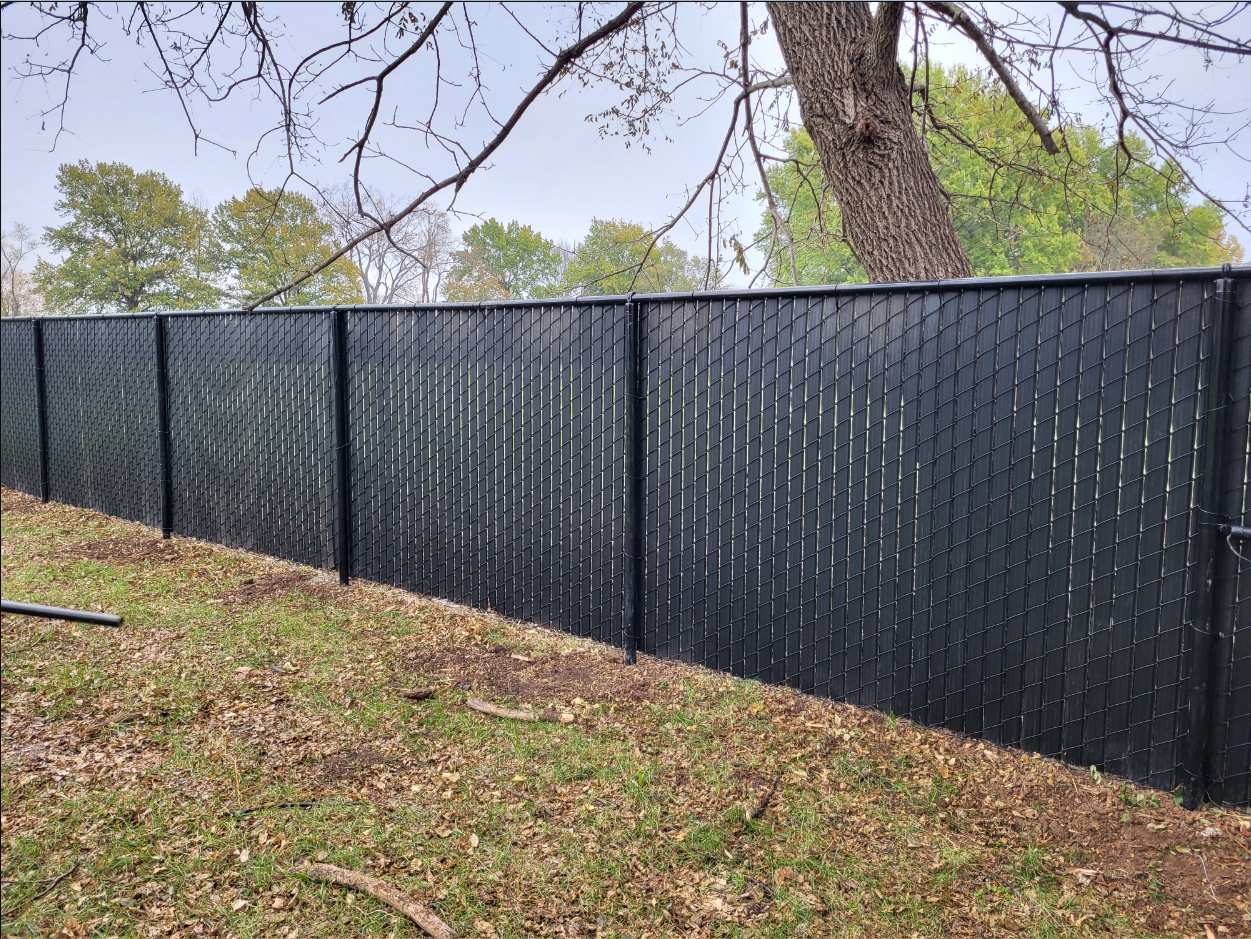
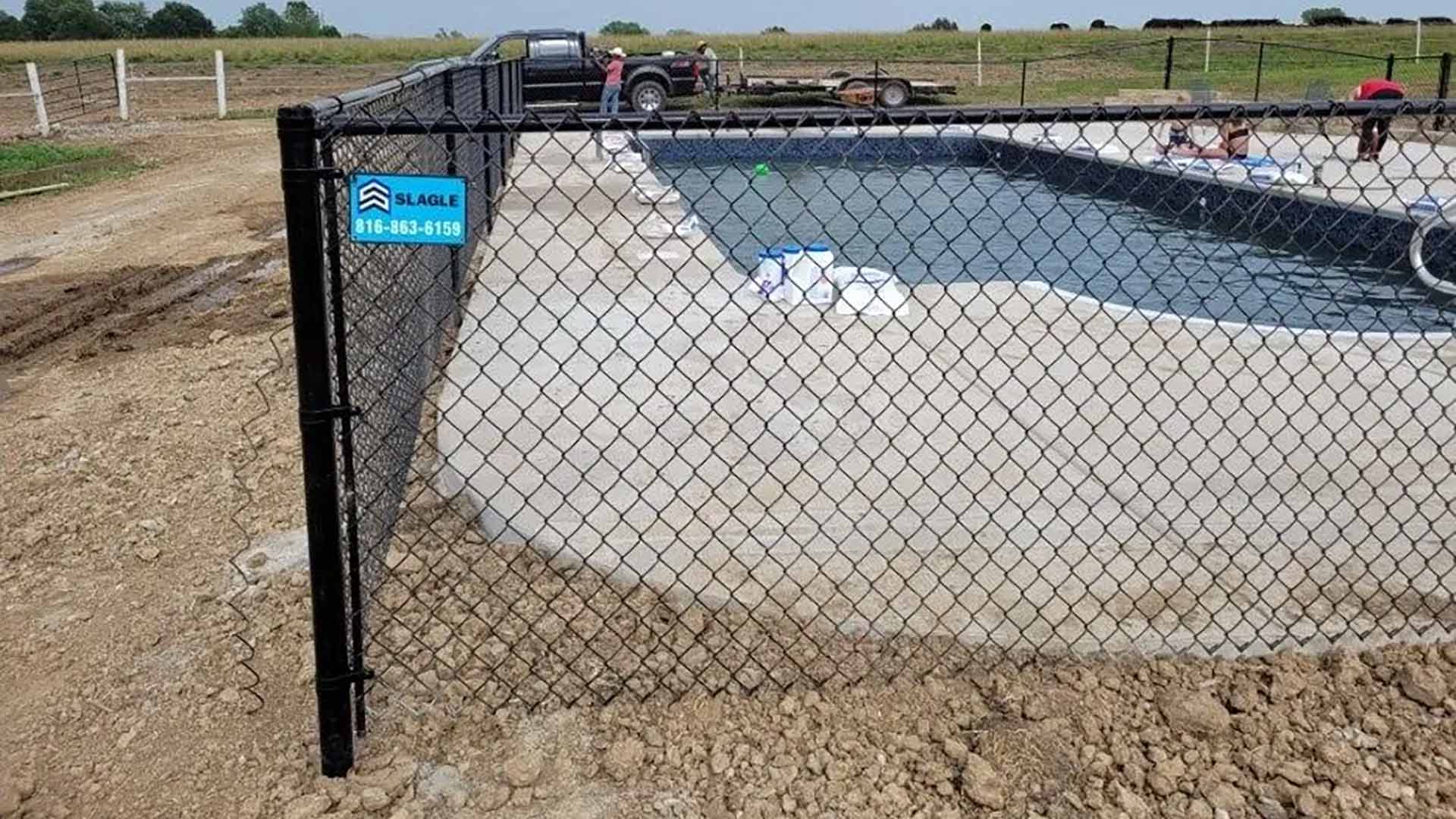
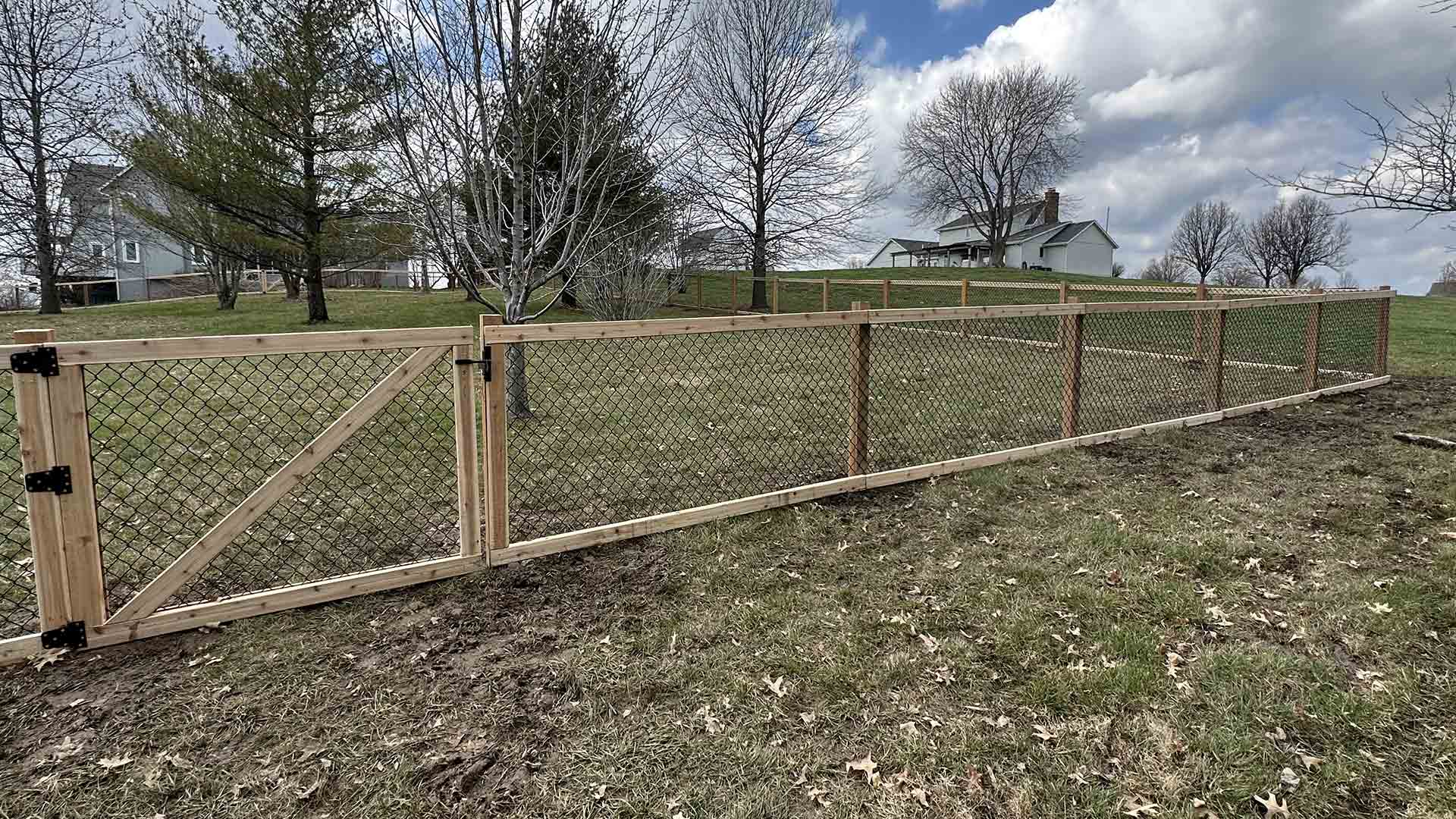
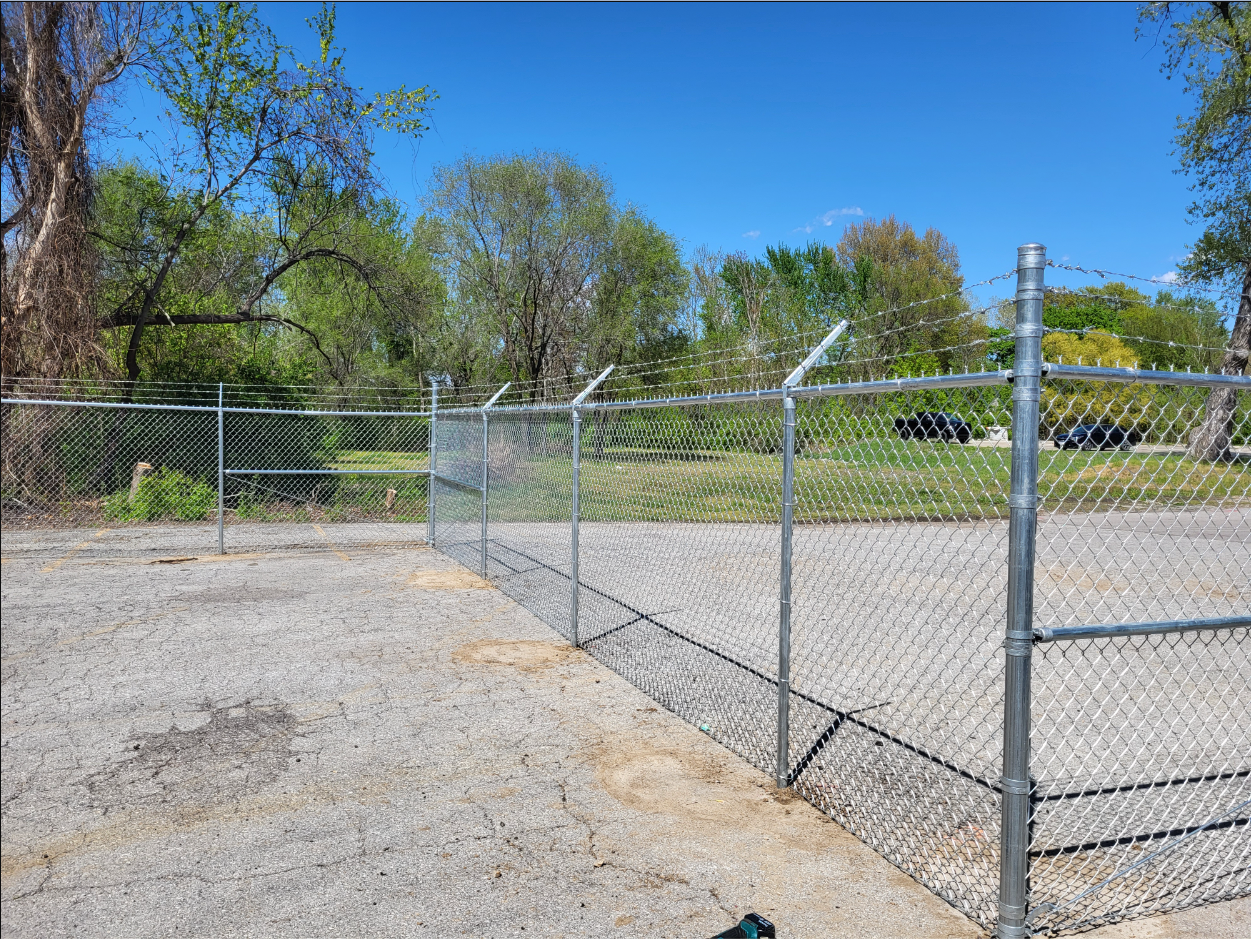
Chain-Link Fence
Chain-link gates offer the greatest flexibility.
Available in nearly any width for:
- Residential yards
- Commercial properties
- Sports fields
- Dog runs
Should My Gate Open In or Out?
Most residential gates swing inward toward the property.
Benefits include:
- Better security
- Avoids blocking sidewalks
- Meets many local code requirements
- Protects pedestrians
Your contractor can recommend the best swing direction based on your property’s layout.
What About Pool Gates?
Pool fences often have additional safety requirements.
Many municipalities require:
- Self-closing hinges
- Self-latching hardware
- Specific latch heights
- Gates that swing away from the pool
If you’re installing a pool fence, be sure to check local building codes and HOA requirements.
Heavy Gates Need Strong Support
As gate width increases, so does its weight.
Professional installers often use:
- Larger posts
- Steel reinforcement
- Heavy-duty hinges
- Adjustable hardware
- Drop rods for double gates
Proper construction helps prevent sagging and extends the life of your gate.
Can I Add Another Gate Later?
Yes—but it’s usually more cost-effective to install the gate you need during the original fence installation.
Adding a gate later may require:
- Removing fence sections
- Installing new posts
- Purchasing additional hardware
- Modifying existing fence panels
Planning ahead can save both time and money.
Common Mistakes Homeowners Make
Avoid these common gate-planning mistakes:
- Choosing the smallest possible gate
- Forgetting about future equipment
- Not measuring riding lawn mowers
- Ignoring trailer access
- Overlooking HOA requirements
- Installing gates too close to landscaping
Working with an experienced fence contractor can help you avoid these issues.
Why Professional Installation Matters
A gate is only as good as its installation.
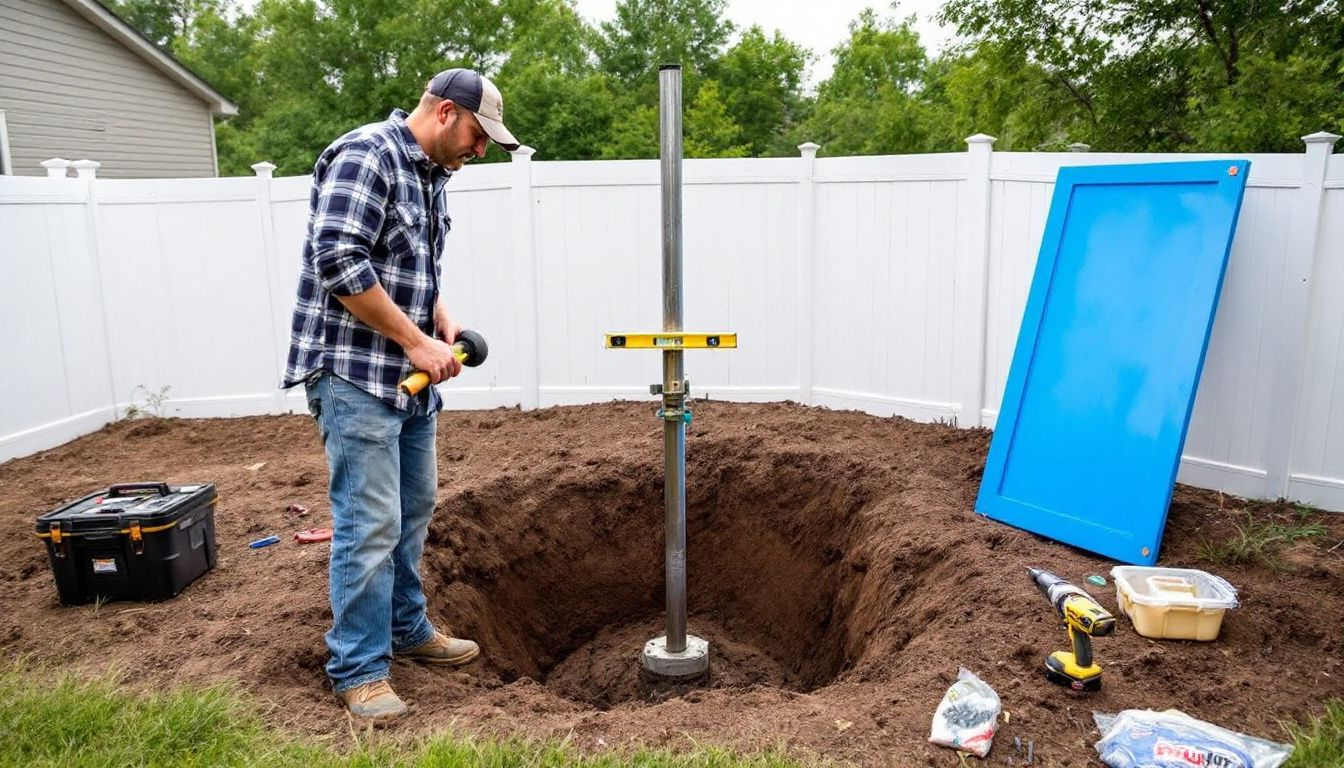
Professional installers ensure:
- Proper post depth
- Strong concrete footings
- Smooth operation
- Correct latch alignment
- Durable hardware
- Long-lasting performance
A properly installed gate should open and close smoothly for years with minimal maintenance.
Why Homeowners Choose Slagle Fence
Slagle Fence proudly installs custom gates and fencing throughout the Kansas City metro.
We specialize in:
- Cedar privacy fencing
- Vinyl fencing
- Ornamental steel fencing
- Chain-link fencing
- Walk gates
- Double drive gates
- Custom gate solutions
Our team works with every homeowner to recommend gate sizes that fit their property, lifestyle, and long-term needs.
Frequently Asked Questions
Is a 3-foot gate wide enough?
For basic foot traffic, yes. However, many homeowners prefer a 4-foot gate to accommodate lawn equipment and larger items.
What’s the best driveway gate width?
A 10-foot double gate is one of the most versatile options for residential properties, offering comfortable access for most vehicles and trailers.
Can gates be custom-built?
Absolutely. Gates can be customized to fit unique property layouts, equipment, or architectural styles.
Will a wider gate sag?
Not when it’s properly built. Reinforced frames, heavy-duty hinges, and sturdy posts help support larger gates and reduce sagging over time.
Final Thoughts
Choosing the right gate width is just as important as selecting the right fence. While a standard 3-foot walk gate may work for basic access, many homeowners benefit from a 4-foot or 5-foot gate for added convenience. If you need vehicle access, a 10-foot or 12-foot double gate is often the best solution.
By considering your current needs and future plans, you’ll end up with a fence that’s practical, functional, and built to serve your family for years to come.
If you’re planning a new fence, the experts at Slagle Fence can help you choose the perfect gate size and design for your property.